


Root Canal Treatment in Henderson, NV
Stop the Pain and Keep Your Natural Tooth
A root canal has an unfair reputation. The procedure itself feels a lot like getting a filling; the pain people remember is the infected tooth before treatment. When decay or a crack reaches the nerve inside a tooth, a root canal removes the infection, seals the tooth, and lets you keep it instead of pulling it. Dr. Aman Sidhu performs root canals at our Henderson office with modern anesthesia and comfort options, and most patients are back to normal the next day.
BOOK AN EXAM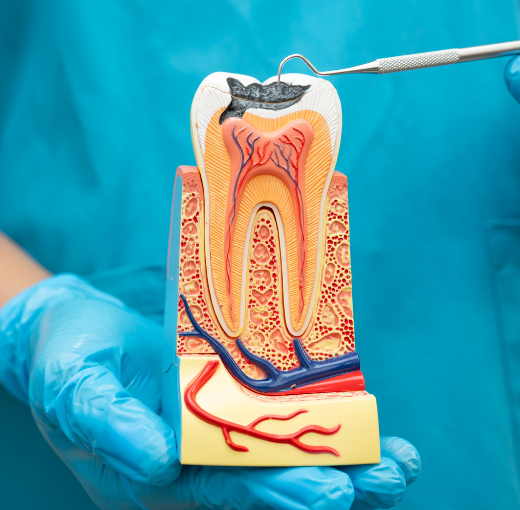
When Is a Root Canal Needed?
Inside every tooth is a chamber of nerve and blood vessels called the pulp. When bacteria reach it, through deep decay, a crack, a deep filling, or trauma, the pulp becomes inflamed and then infected. Because the tooth is enclosed, the pressure has nowhere to go, which is why the pain can be intense. A root canal removes the infected pulp, disinfects the canals, and seals the tooth so it can stay in your mouth for decades.
Signs You Might Need One
- Throbbing or persistent toothache, especially at night
- Pain when biting or chewing
- Sensitivity to hot or cold that lingers after the drink is gone
- Swollen, tender gums around one tooth
- A pimple-like bump on the gum, or a bad taste
- A tooth that has darkened or turned gray
Some infected teeth have no symptoms at all and are found on a routine X-ray, which is one more reason regular exams matter.
What Happens During a Root Canal
1. Numbing
Local anesthetic fully numbs the tooth and surrounding area. If you are anxious, ask about comfort options.
2. Cleaning the canals
A small opening is made in the top of the tooth, the infected pulp is removed, and each canal is cleaned, shaped, and disinfected.
3. Sealing
The canals are filled with a rubber-like material and sealed to keep bacteria out.
4. Restoring the tooth
Back teeth almost always get a crown afterward to protect them from cracking. Our in-house lab makes the crown, so the fit and color are handled here in Henderson.
A front tooth is often done in one visit; a molar may take two. You can drive yourself home and eat once the numbness wears off.
Why Save the Tooth?
Your natural tooth keeps your bite stable, protects the bone around it, and chews better than any replacement. A root canal plus crown is less invasive and usually less expensive over time than an extraction followed by an implant or bridge. Root canal treatment has a high long-term success rate, and a treated tooth that is properly restored can last a lifetime.
Why Henderson Patients Choose Densley Dental
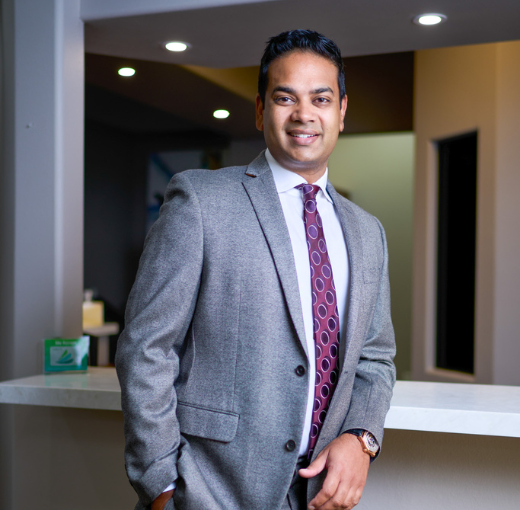
Dr. Aman Sidhu, DDS, graduated with honors from the USC School of Dentistry, managed a dental clinic in Pittsburgh, and taught at the University of Pittsburgh School of Dentistry before joining Densley Dental. As team dentist for the Las Vegas Raiders and Las Vegas Aces, he treats patients who cannot afford downtime, and that same efficiency applies to you. Our in-house lab and CT imaging mean diagnosis, treatment, and the final crown all happen in one Henderson office.
Frequently Asked Questions

Tooth Pain Does Not Get Better on Its Own
Call us today. We hold time for patients in pain and will tell you exactly what is going on and what it will cost before we treat anything.