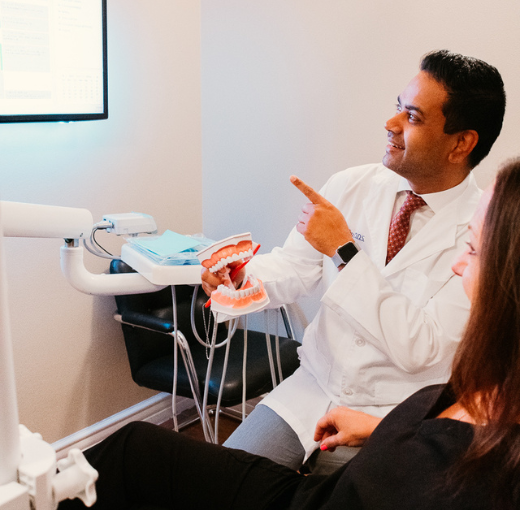
CPAP and oral appliances can both keep the airway open, but they work differently and do not suit every diagnosis. Dr. Aman Sidhu, who earned his Doctor of Dental Surgery with honors from the University of Southern California, works with Henderson, Nevada, patients exploring sleep apnea treatment. He also serves as the dentist for the Las Vegas Raiders. Through Densley Dental, our providers and staff coordinate oral appliance therapy with each patient’s physician when it is medically appropriate.
How CPAP Keeps the Airway Open
Continuous positive airway pressure, commonly called CPAP, delivers a steady flow of air through a mask. This pressure prevents the airway from collapsing while you sleep.
CPAP is often prescribed for obstructive sleep apnea, particularly in more severe cases. Some people adapt to it quickly, while others experience challenges with mask fit, air leaks, dryness, pressure, machine noise, or traveling with the equipment. A sleep clinician may adjust the mask, humidification, or pressure settings to improve nightly use.
What a Custom Oral Appliance Does
An oral appliance is worn over the teeth and gently repositions the lower jaw to create more room in the airway. It is compact, silent, and easy to pack for travel.
This approach may be considered for qualifying patients with mild to moderate obstructive sleep apnea. It may also be an option for certain people who cannot use CPAP consistently. A custom appliance is different from an over-the-counter mouthguard and requires professional fitting, adjustment, and follow-up.
Practical Differences Between CPAP and Oral Appliances
The day-to-day distinctions become clearer when you compare how the devices are worn, cleaned, and transported:
- Fit and comfort: CPAP involves a facial or nasal mask and airflow. An oral appliance fits inside the mouth over the teeth. Both can require time to get used to.
- Noise and portability: CPAP equipment produces some sound and requires more packing space. An oral device operates silently and fits into a small case.
- Cleaning: Masks, tubing, and water chambers need regular maintenance. An oral appliance should be cleaned daily and inspected during dental visits.
- Ongoing monitoring: CPAP settings may be reviewed by a sleep specialist. Appliance therapy involves dental checks, possible adjustments, and follow-up testing directed by the sleep physician.
Some oral appliance users experience temporary jaw soreness, tooth sensitivity, dry mouth, excess saliva, or changes in their bite. Follow-up appointments allow us to assess the fit and monitor the teeth and jaw.
Why a Sleep Study Comes First
Snoring does not automatically mean that someone has sleep apnea. A physician must confirm the condition through an appropriate sleep study, either at a sleep center or through an approved home test.
Testing identifies the type and severity of the disorder. Those results help determine whether CPAP, an oral appliance, or another medical approach makes the most sense.
Our patient resources include information that can help you prepare for an office visit. You can also review our accepted insurance plans and explore the other dental services available through our office.
Discuss Oral Appliance Therapy in Henderson
A sleep apnea device is useful only when it matches your diagnosis and can be worn consistently. Call our team at Densley Dental at (702) 212-6641 or schedule an appointment in Henderson, NV, to discuss whether a custom oral appliance may work with your sleep physician’s recommendations.