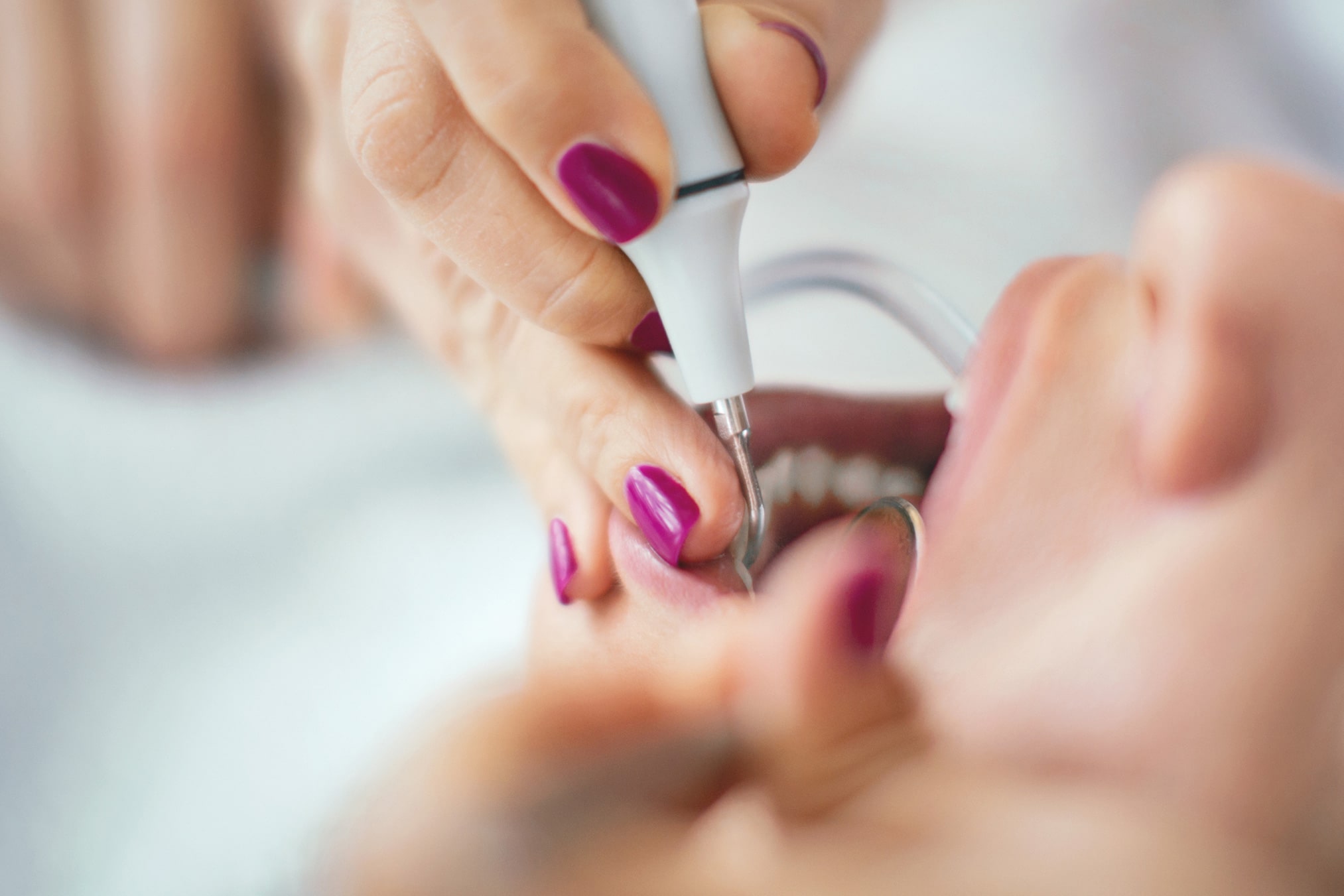
See a dentist within 24 hours, even if nothing hurts.
That is the whole answer. Dental injuries hide. A tooth can look fine, feel fine, and still have a cracked root or a dying nerve underneath. The pain shows up six weeks later, and by then the small fix is gone and the big one is what is left.
Here is what to do, in the order it matters.
At Densley Dental in Henderson, NV, accident and trauma cases are treated by Dr. Aman Sidhu, DDS, a University of Southern California honors graduate and team dentist of the Las Vegas Raiders and the Las Vegas Aces.
Before You Do Anything Else
Four things, right now, before you clean up, before you call anyone, before you decide whether it is serious.
- Check whether any tooth is loose, moved, or missing. Run your tongue along the bite line. A tooth that sits differently than it did an hour ago is an urgent problem, not a wait-and-see one.
- Take photos. Your mouth, your face, any visible damage. Do it in good light and do it before anything gets treated or cleaned up. You cannot go back for these.
- Do not rinse hard or poke at it. If a tooth is loose, pressure and probing make it worse.
- Call a dentist and say it was an accident. Not "I think I chipped a tooth." The word accident changes how you get scheduled and what gets recorded.
Everything else can wait an hour. These cannot.
The First Hour: If a Tooth Was Knocked Out
This hour decides whether the tooth survives.
- Pick it up by the crown, the chewing part. Do not touch the root.
- If it is dirty, rinse it gently with milk or saline. Do not scrub it, and do not use tap water.
- Put it back in the socket if you can, and hold it with light pressure or a gentle bite on clean gauze.
- If you cannot reseat it, put it in a cup of milk. Your own saliva works. Water damages the root cells that let the tooth reattach.
- Get to a dentist immediately.
A tooth replanted within 30 minutes has the best odds. After an hour, the odds drop hard. Adult teeth can be replanted. Baby teeth usually are not, because forcing one back in can damage the permanent tooth forming above it.
When to Go to the ER First
Teeth can wait a few hours. Some things cannot. Go to an emergency room before a dental office if you have:
- Trouble breathing or swallowing
- Heavy bleeding that will not slow after 10 minutes of pressure
- A jaw that will not open, will not close, or sits crooked
- Facial swelling that is spreading
- Any loss of consciousness, confusion, or a head injury
An ER can manage pain, bleeding, and fractures. It cannot repair a tooth. You will still need a dentist afterward.
The First 24 Hours
Get examined. Say it was an accident and ask for a same-day or next-day slot. Most offices hold time for injury patients.
Write down what happened. Date, time, how it happened, what you felt. Details fade within a week and they do not come back.
Eat soft and chew on the other side. Skip anything hard, crunchy, sticky, or sharply hot and cold.
Skip alcohol and straws. Both interfere with clotting if there is any open tissue.
Do not wait to see if it settles down. A tooth that stops hurting has not always healed. Sometimes the nerve just died and stopped sending signals.
The First Week: What to Watch For
This is when hidden damage surfaces. Any of these means call back:
- New sensitivity to hot or cold
- Pain when you bite down on that tooth
- A tooth that darkens or turns gray
- A pimple or bump on the gum above a tooth
- Jaw soreness getting worse instead of better
- A bite that feels off, like one tooth hits first
None of these are things to tough out. Each one has a treatment that is simple now and complicated later.
The Part People Miss: Weeks and Months Later
Dental trauma does not finish in a week. Injured teeth get rechecked over months because nerve damage and root problems declare themselves slowly. A tooth that tested alive two weeks after the accident can test dead at four months.
Ask your dentist when to come back, and put it on the calendar before you leave the office. Skipping those recheck visits is the single most common way an accident tooth gets lost a year later.
Also ask this question at the first visit: what is likely to be needed five or ten years from now because of this? A cracked tooth crowned today may need an implant down the road. Getting that on paper early is worth more than it sounds.
What Counts as a Dental Injury
Most are not a tooth on the ground. Any of these count, and all of them are worth an exam:
- A chip you can only feel with your tongue
- A tooth that feels loose or sits differently
- A cracked or lost filling, crown, or veneer
- Cuts to the lip, tongue, cheek, or gum
- Jaw pain, clicking, or trouble opening wide
- Sudden sensitivity to hot or cold
- A tooth that changes color, even weeks later
That last one is the quiet emergency. A tooth that turns gray after an accident is telling you the nerve died. It is treatable, and it does not fix itself.
Densley Dental's personal injury dentistry page goes through how each of these gets treated.
Mistakes That Cost People Teeth
- Waiting because it stopped hurting. Pain ending is not healing.
- Storing a knocked-out tooth in water. Milk or saliva only.
- Scrubbing the root clean. That tissue is what lets the tooth reattach.
- Only having the obvious tooth looked at. Force travels. Damage often shows up on the opposite side of the mouth.
- Skipping the recheck visits. Trauma is monitored over months, not cleared in one appointment.
- Not saying it was an accident. It changes the exam, the imaging, and the record.
Frequently Asked Questions
Can a knocked-out tooth be saved?
Often, if you move fast. Handle it by the crown, keep it moist in milk or saliva, and get to a dentist within the hour. Adult teeth can be replanted. Baby teeth usually are not.
Do I need a dentist if the tooth only chipped?
Yes. A small visible chip can sit above a crack running into the root. An exam and an X-ray rule that out in a few minutes.
How long after an accident can dental problems show up?
Weeks to months. Nerve death, hairline fractures, and root resorption all take time to appear. That is why follow-up visits are part of the treatment and not an upsell.
Why did my tooth turn gray after the accident?
The nerve inside likely died. The tooth is usually not lost. It typically needs root canal treatment, and the color can be corrected afterward.
What if my accident was months ago?
Get seen anyway. Late damage is common and treatable. Bring any photos or records you have from the time it happened.
Can I just wait until the swelling goes down?
No. Swelling can mask a loose tooth or an infection that is spreading. Get examined while it is swollen and have it rechecked after.
Personal Injury Dentistry in Henderson and Las Vegas
Accident dentistry is not routine dentistry. The teeth were healthy the day before. The treatment happens in stages. And the records have to be as careful as the work.
Densley Dental has cared for Henderson and Las Vegas families since 1991, all under one roof on S. Pecos Road. We hold time for injury and emergency patients during office hours and often see them the same day. When you are working with a personal injury attorney, we send your exam notes, X-rays, photos, and treatment plan to their office with your written permission.
No case too small. No case too big.
Learn more on our personal injury dentistry page, or read about emergency dental care, root canal treatment, crowns and bridges, and dental implants.
Hurt in an accident? Call (702) 212-6641 and tell us what happened.