Yes, you can eat normally with snap-on dentures once you have adjusted to them. Because they lock onto dental implants instead of resting on your gums, they stay put while you chew, and most patients work back to a full diet within a few weeks. The first month is where the rules matter.
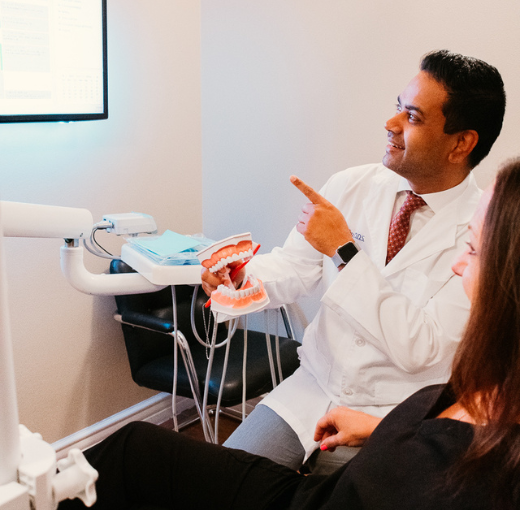
At Densley Dental in Henderson, NV, implant-supported dentures are placed by Dr. Aman Sidhu, DDS, a University of Southern California honors graduate and team dentist of the Las Vegas Raiders.
Why Eating Is Easier With Snap-On Dentures
Traditional dentures rest on the gums and rely on suction or adhesive, so they can shift or lift when you bite into something firm. Snap-on dentures attach to two or more dental implants set in the jawbone. That anchors the denture and sends bite force into the bone rather than the soft tissue. The practical result is more chewing power, less rocking, and no adhesive to worry about in the middle of a meal.
What You Can Eat, and When
The First Week or Two
Start with soft foods while your gums settle and you learn the feel of the new bite:
- Eggs, yogurt, and cottage cheese
- Mashed potatoes, oatmeal, and soft grains
- Soups, smoothies, and blended vegetables
- Bananas, avocado, and other soft fruit
Weeks Two Through Four
As soreness fades, add tender foods that ask a little more of your bite:
- Soft fish and flaky proteins
- Cooked vegetables
- Ground or slow-cooked meats
- Pasta and soft breads
After You Have Fully Adjusted
Most patients return to a wide, normal diet, including foods that traditional denture wearers often give up. What changes is how you bite and chew, not what is on the plate.
Can You Eat Steak, Corn on the Cob, and Apples?
These are the foods patients ask about most, and the answer is usually yes, with a technique change:
- Steak: Cut it into small, bite-size pieces and chew with your back teeth on both sides at once. Start with tender cuts before tougher ones.
- Corn on the cob: Biting straight into the cob levers the front of the denture. Cut the kernels off instead.
- Apples and raw vegetables: Slice them rather than biting into them whole with your front teeth.
- Crusty bread and pizza crust: Tear or cut into smaller pieces instead of pulling against your front teeth.
Foods to Avoid With Snap-In Dentures
A few foods are hard on the denture or the implant attachments no matter how long you have worn them:
- Sticky foods like caramel, taffy, and chewing gum, which can pull the denture off its attachments
- Very hard foods like ice, hard candy, nut shells, and unpopped popcorn kernels, which can chip the denture teeth or wear the attachments
- Very chewy meats like jerky, at least until you are confident with your bite
The Do's
- Cut food into smaller pieces so you are not tearing at it with your front teeth
- Chew on both sides at once to keep pressure balanced and the denture seated
- Bite with your back teeth rather than snapping into food at the front
- Add foods back gradually instead of testing everything in one meal
- Rinse after meals and remove the denture nightly to clean it and the attachments
The Don'ts
- Do not use your teeth as tools to open packaging
- Do not force the denture into place if it suddenly feels different or painful
- Do not ignore discomfort that lasts more than a few days
What Are the Downsides of Snap-In Dentures?
Snap-in dentures solve most of the problems people have with loose dentures, but they are not the right fit for everyone. The trade-offs are worth knowing before you decide:
- Surgery and healing time. The implants have to be placed and allowed to bond with the jawbone before the final denture is attached.
- Higher cost than conventional dentures, because the treatment includes implants and attachments.
- Parts that wear. The small retention inserts that make the denture snap in lose grip over time and need periodic replacement.
- Still removable. They come out for cleaning, which some patients like and others do not. Patients who want teeth that never come out may prefer a fixed implant bridge.
- Bone requirements. Some patients need bone grafting first. Read more in can bone loss affect your candidacy for implants.
Can You Sleep With Snap-On Dentures?
Most dentists recommend taking snap-on dentures out at night. Removing them lets your gums rest, gives you a chance to clean both the denture and the implant attachments, and helps prevent irritation and odor. Store the denture in water or a denture-safe soaking solution so it does not dry out. Follow the specific instructions Dr. Sidhu gives you, since some cases differ.
Snap-On Dentures vs. Snap-On Smile Products
The names sound alike, but they are very different. Snap-on dentures replace missing teeth and attach to dental implants in the jaw. Snap-on smile products and other clip-on veneers are cosmetic shells that fit over your existing natural teeth to change how they look. They do not replace missing teeth and do not give you the chewing stability of an implant-anchored denture. If your goal is to eat comfortably with missing teeth, implant-supported dentures are the option built for it. If your teeth are healthy and you want to change how they look, porcelain veneers are the long-term cosmetic option.
When Discomfort Means You Need an Adjustment
Mild soreness in the first few weeks is normal. What is not normal is pain that keeps going, a denture that rocks or lifts while you chew, or a sore spot that returns to the same place. Those usually point to a fit or attachment problem. Caught early, it is a quick adjustment. Left alone, it becomes a bigger repair. See managing soreness with snap-on dentures for more.
Frequently Asked Questions
Can you eat normally with snap-on dentures?
Yes, once you have adjusted. Because snap-on dentures lock onto dental implants, they stay in place while you chew. Most patients start with soft foods and work back to a near-normal diet over the first few weeks.
Can you eat steak with snap-on dentures?
Usually, yes, after the adjustment period. Cut steak into small pieces, chew with your back teeth on both sides, and start with tender cuts before moving to firmer ones.
Can you eat corn on the cob with snap-in dentures?
Many patients can once they are fully adjusted, but biting straight into the cob with your front teeth puts leverage on the denture. Cutting the kernels off the cob is the safer habit.
What foods can't you eat with snap-in dentures?
Sticky foods like caramel, taffy, and chewing gum can pull the denture off its attachments. Very hard items like ice, hard candy, and unpopped popcorn kernels can crack the teeth or wear the attachments. These are best avoided.
What are the downsides of snap-in dentures?
They require implant surgery and healing time, they cost more than conventional dentures, the retention inserts wear out and need periodic replacement, and they still come out for cleaning. Some patients also need bone grafting before implants can be placed.
Can you sleep with snap-on dentures in?
Most dentists recommend taking them out at night. Removing them lets your gums rest, gives you a chance to clean the denture and the implant attachments, and helps prevent irritation and odor. Follow the instructions your dentist gives you.
How long do snap-in dentures last?
The small retention inserts wear with daily use and are replaced periodically, often about once a year. The denture itself can last many years with regular checkups, relines, and adjustments.
Are snap-on dentures the same as a snap-on smile?
No. Snap-on dentures replace missing teeth and attach to dental implants. Snap-on smile products are cosmetic shells that fit over your existing natural teeth. They do not replace missing teeth or provide implant-level chewing stability.
Snap-On Dentures in Henderson, NV
If you are weighing implant-supported dentures, or your current set is keeping you from eating the way you want, see our dentures page or read more about the dental implants that support them. Call Densley Dental at (702) 212-6641 to schedule a consultation.
More About Snap-On Dentures